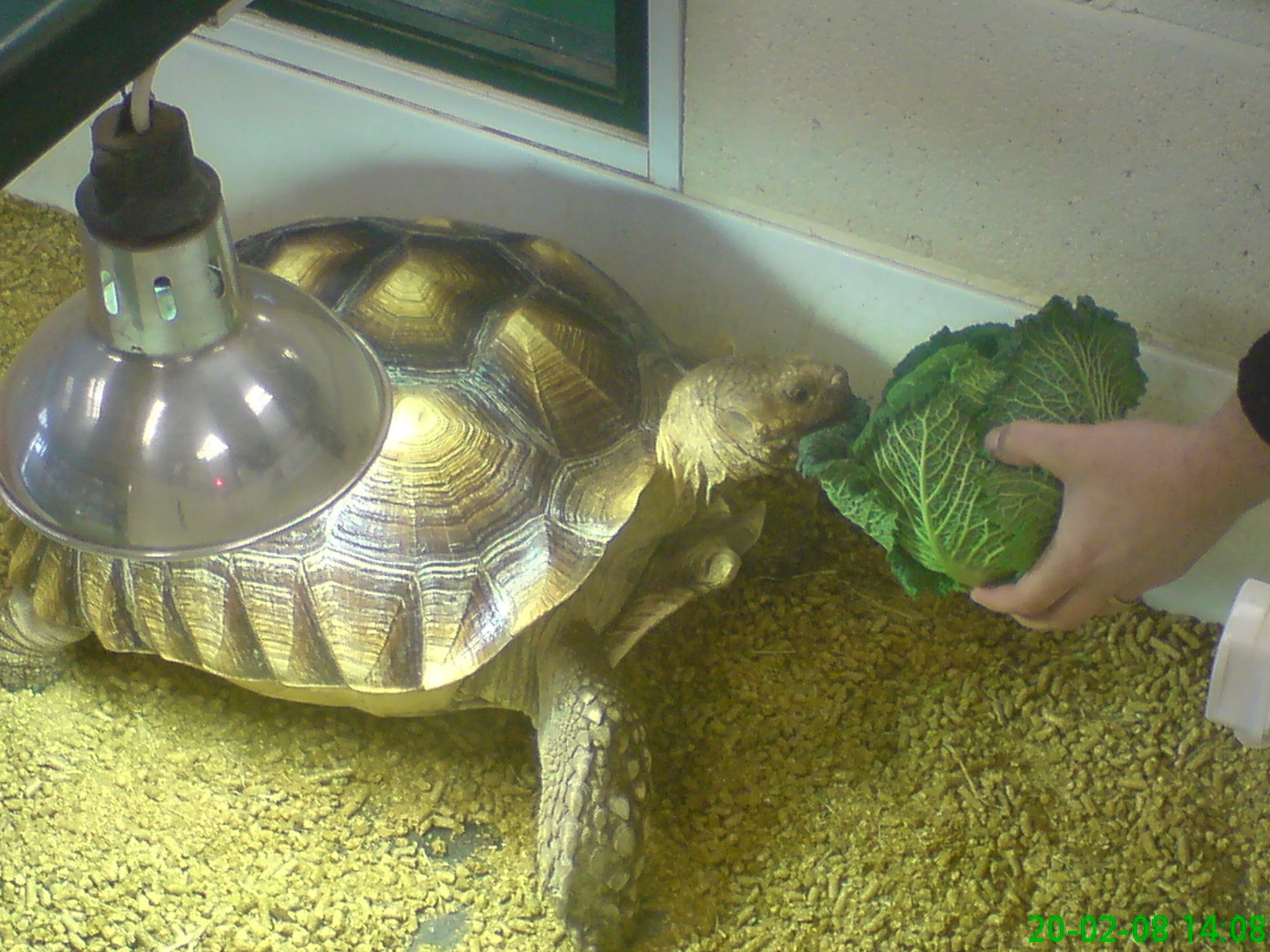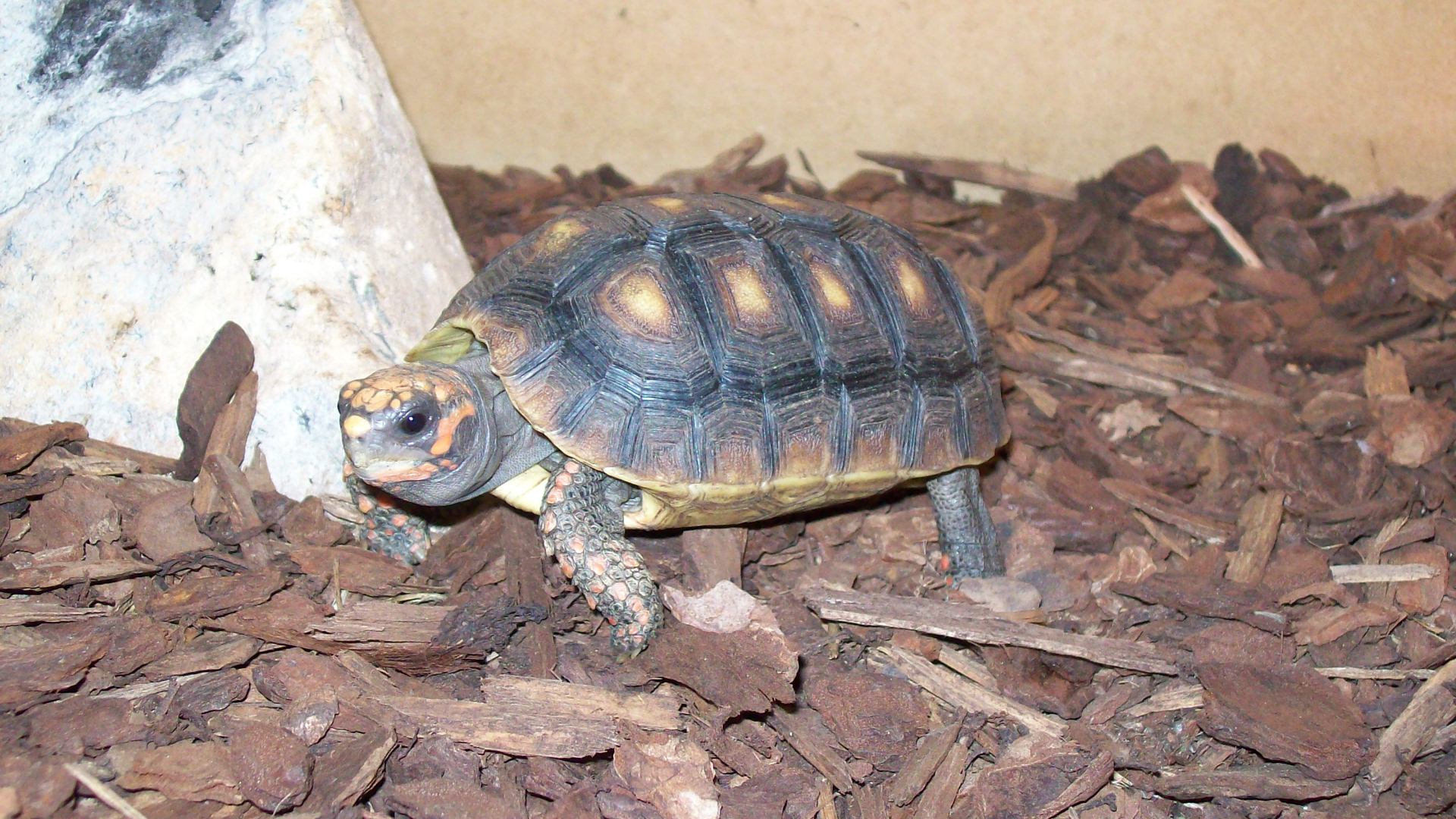
- Common Group: TORTOISES
- Common Name: Red Foot Tortoise
- Scientific Name: Geochelone Carbonaria
- Distribution: Tropical S. America
- Size: 12” – 16”
Natural Habitat: This terrestrial species inhabits the tropical rain forests of tropical South America. A large outdoor enclosure is best for captivity in the size range of 8’ x 4’ x 2’.
Behaviour:
Docile and friendly, easy to handle. Provide dense foliage and an uncluttered enclosure with maximum floor space.
Captive Environment:
Use full spectrum lighting 12-14 hours per day, (max lifespan of bulb is 12 months). Provide dark hiding places for this species.
Temperature:
Day temperature should be gradient from 30—32 degrees C. Maintain night temperature range between 20-22 degrees C. Use a thermostat to obtain correct temperatures.
Humidity:
This species requires moderate to high levels of humidity.
Water Requirements:
Provide a large shallow bowl for drinking and soaking. Mist enclosure every day.
Nutritional Requirements:
This species is an omnivore (eats both meats and plants). Also feeds on small mammals such as pink baby mice. Likes dark greens (collard, mustard, turnip, dandelions). Feed beets, spinach, cabbage, and/ or kale in small amounts. Supplement leafy diet with (squash, and zucchini).